Tuesday, June 24, 2014

7 Powerful Words that Determine You Are Truly Happy

Delighted 4

If you want to envision a happy person’s stance, imagine one foot rooted in the present with mindful appreciation of what one has – and another foot reaching toward the future for yet-to-be-uncovered sources of meaning.
-Kashdan & Biswas-Diener

You will know how happy you are just by asking yourself how many of the following words are in your personal dictionary. These 7 words will inspire you to live a meaningful and rewarding life. You know life is full of ups and downs. When you embrace these 7 words you will be able to be resilient and sustain your happiness:    

1.      Gratitude: There is an important element of thankfulness in gratitude.
Are you grateful for who you are and what you have? Do you remember the support and help that have been given to you? Are you taking things for granted? Do you feel grateful and express thanks to those who have gone through life with you in thick and thin? Happiness is a grateful heart.
 "Let us be grateful to people who make us happy; they are the charming gardeners who make our souls blossom." - Marcel Proust

2.      Contentment: Are you contented with your life? Do you find satisfaction in what you do every day? It is good to set goals and achieve advancement in life, but you must find fulfillment in your current situation.
  “Be content with what you have; 
rejoice in the way things are.
When you realize there is nothing lacking, 
the whole world belongs to you.” ― Laozi
3.      Kindness: It is about sensitive to other people’s needs. Are you caring, friendly and generous? Happiness for others begets more happiness for you. It is also about politeness and respectful.  Say please and thank you more often. Just do it and you will definitely feel good. 
“The smallest act of kindness is worth more than the greatest intention.” ―Kahlil Gibran 
4.      Forgiveness:  The only fact is that if you don’t forgive it will only hurt yourself more. When you are thinking of taking revenge your mind is in turbulence.  Perhaps, the other person is in deep troubles for doing such an unkindly act to you. Find calmness in forgiveness.
"To forgive is the highest, most beautiful form of love. In return, you will receive untold peace and happiness." - Robert Muller
5.      Moment: Are you interested in what you do? If not, you have not found your passion yet.  When you do, you will immerse in your work and time will stand still for you.
Are you still suffering from past pains or worrying about the future? You only live in the present. Take action and do what you have to do now and there will be no regret in the future.
Live and enjoy every moment. Listen to the falling rain and the rushing of the waves to the shore. Capture the sight of the blooming flowers outside the window.
 Life is not made up of minutes, hours, days, weeks, months, or years, but of moments. You must experience each one before you can appreciate it.” ― Sarah Ban Breathnach
6. Movement: Life is movement. Movement creates energy. Energy is the force that propels you to greater height. Instead of watching TV or sitting around, get outside and embrace nature. Walk, jog or cycle.   Movement creates health. You are young because you move. You feel old because you are inactive. Move every day to feel fresh and energetic.

Movement is a medicine for creating change in a person's physical, emotional, and mental states. - Carol Welch

7. Appreciation: Appreciation is looking for the good in somebody or something. 
Do you enjoy your life from day to day? Every day may be the same; it is up to you to find the little pleasures in it.
Happiness is a job well done even though it is a daily chore. Things like washing the dishes and keeping the house clean and tidy are excellent examples.

 “Appreciation is a wonderful thing. It makes what is excellent in others belong to us as well.” 
―Voltaire


What is your take? Do you find these 7 words translate into happiness? What words should be taken away and what other words should be added to be truly happy? Please share.


Monday, June 23, 2014

WHY YOU SHOULD KEEP A JOURNAL AT WORK


Journal

DUST OFF THE DIARY FROM YOUR TEENAGE YEARS. A 15-MINUTE WRITING EXERCISE AT THE END OF YOUR WORKDAY CAN MAKE YOU MORE SUCCESSFUL.


Do you close your laptop, turn off your phone, and shut your office door at the end of the workday? You may be missing out on the most important activity that can make you better at your job.
According to a recent working paper from Harvard Business School, setting aside 15 minutes to reflect at the end of the workday can boost your performance and impact your career success.
“When people have the opportunity to reflect, they experience a boost in self-efficacy," says Harvard Business School professor Francesca Gino, who coauthored the paper. "That is, they feel more confident that they can achieve things. As a result, they put more effort into what they’re doing and what they learn."
The findings come from a series of field and laboratory experiments. In one study at Wipro, a business-process outsourcing company based in Bangalore, India, three groups of employees were put through training for a particular customer account. In one group, employees were asked to spend the last 15 minutes of their workday writing and reflecting on the lessons they’d learned that day. They did this for 10 consecutive days. In another group, the participants did the same reflective writing exercise but also spent an additional five minutes discussing their notes with a fellow trainee. Those in the last group, or the control group, simply kept working at the end of the day--no reflection, no writing, no sharing.
The result? The journaling employees performed significantly better than those who simply kept working until the end of their shift. The reflection group performed 22.8% better on the test, and the sharing group performed 25% better than the control group. “This in spite of the fact that the control group had been working 15 minutes longer per day,” says Gino, proving plowing through the last items on our to-do list at the end of the day may make us feel we’re being productive, but in the long term, isn’t the path to success.
“If we take the time to reflect, a glance at the clock may suggest we’re working less, but we will find our minds are more engaged and our performance is improved,” says Gino.
The reason this works, says Gino, is because the brain needs that extra time to reflect to “codify” the things we’ve gone through during the day. “Rather than following the conventional wisdom to ‘get busy,’ our research suggests that performance is enhanced when we follow former IBM CEO Thomas J. Watson’s advice to simply ‘think,’” says Gino.
But simply thinking isn’t enough. We also need to write it down. “Psychology research shows that writing about our life experiences has many positive effects, including increasing students' grade-point averages, re-employment after losing a job, and improving memory,” says Gino. Putting our thoughts to paper helps us visualize what’s important.
The impetus for the study came out of Gino’s own experience as an instructor. “After each class I teach, I take time to debrief, noting the comments the students made and what points I raised [that] led to quality discussions," she says. "I then fold these insights into the next class I teach.”
The success Gino experienced in her classes made her realize this daily routine could be easily implemented across other industries to improve performance. “It’s just a matter of making an appointment with ourselves to reflect on the day’s lessons so we can incorporate those lessons into the next day,” she says.
Source: Why You Should Keep A Journal At Work

Sunday, June 22, 2014

PERSONAL MISSION STATEMENTS OF 5 FAMOUS CEOS (AND WHY YOU SHOULD WRITE ONE TOO)


Personal Mission Statement
Brief powerful statement that inspires and guides you on your path through life.

WHETHER IT'S A DAILY MANTRA OR A QUOTE TO RETURN TO WHEN TIMES GET TOUGH, HAVING A PERSONAL MISSION STATEMENT BRINGS FOCUS AND PURPOSE TO YOUR LIFE. HERE ARE FIVE EXAMPLES OF REAL-LIFE PERSONAL MISSION STATEMENTS, FROM LEADERS WHO ROCKED THE WORLD.


Companies have developed mission statements for years. It helps guide them by defining who they are and why they do what they do. Coca-Cola’s mission statement, for example, is “To refresh the world. To inspire moments of optimism and happiness. To create value and make a difference.” For Google it’s “to organize the world’s information and make it universally accessible and useful.”
When Stephen R. Covey wrote The 7 Habits of Highly Successful People in 1989, he put a spin on the idea, suggesting that individuals create their own mission statement as part of his second habit: begin with the end in mind. Twenty-five years later, personal mission statements, sometimes called purpose statements, are proving to be a good tool for high achievers.
“If you want to be successful, you need to think of yourself as a personal brand,” saysWilliam Arruda, author of Ditch, Dare, Do: 3D Personal Branding for Executives. “A personal mission statement is a critical piece of your brand because it helps you stay focused.”
Writing one, however, takes introspection. Arruda suggests asking yourself, what am I passionate about? What are my values? What makes me great?
“We all have super powers--things we do better than anyone else,” he says, adding that it helps to ask someone else what your talents are. “These things often feel natural to us, but it’s important to see them as being special.”
When you’re ready to write, Arruda offers a template that links together three elements: The value you create + who you’re creating it for + the expected outcome. For example: I use my passion and expertise in technology to inspire researchers to create drugs to cure rare diseases.
Each piece is helpful to create the complete puzzle, but Arruda says the most important is the first, your value. “This is your core DNA--your operating principles,” he says. “These are the things that inspire and energize you.”


A personal mission statement is a powerful tool because it provides you with a path for success, and it gives you permission to say no to the things that are distractions. It also changes over time. “As we get older, we have more life experiences and acquire new skills,” Arruda says. “If your mission statement doesn’t change, you risk not being relevant any more.”
While you write a personal mission statement for yourself, there is power in sharing it. “The more you share, the more support you get to achieve your mission,” he says. “Friends and mentors can support you or call you out if you’re doing something counterproductive.”
Here are five examples of real-life personal mission statements:

1. DENISE MORRISON, CEO OF CAMPBELL SOUP COMPANY

“To serve as a leader, live a balanced life, and apply ethical principles to make a significant difference.”
In an Morrison said, “The personal mission statement was important for me because I believe that you can’t lead others unless you have a strong sense of who you are and what you stand for. For me, living a balanced life means nurturing the academic, physical, and spiritual aspects of my life so I can maintain a sense of well-being and self-esteem.”

2. JOEL MANBY, CEO OF HERSCHEND FAMILY ENTERTAINMENT

“I define personal success as being consistent to my own personal mission statement: to love God and love others.”
Manby’s company, Herschend Family Entertainment, owns and operates 26 family-oriented theme parks and attractions across the United States, including Dollywood and the Harlem Globetrotters. He told Skip Prichard that he achieves his personal mission statement in his own endeavors, but feels blessed to be able to achieve it in a growing, profitable business.

3. OPRAH WINFREY, FOUNDER OF OWN, THE OPRAH WINFREY NETWORK

“To be a teacher. And to be known for inspiring my students to be more than they thought they could be.”
In an issue of O magazine, Winfrey recalls watching her grandmother churn butter and wash clothes in a cast-iron pot in the yard. A small voice inside of her told her that her life would be more than hanging clothes on a line. She eventually realized she wanted to be a teacher, but “I never imagined it would be on TV,” she writes.

4. SIR RICHARD BRANSON, FOUNDER OF THE VIRGIN GROUP

“To have fun in [my] journey through life and learn from [my] mistakes.”
Branson shared his personal mission statement in an interview with Motivated magazine. He added that “In business, know how to be a good leader and always try to bring out the best in people. It’s very simple: listen to them, trust in them, believe in them, respect them, and let them have a go!”

5. AMANDA STEINBERG, FOUNDER OF DAILYWORTH.COM

“To use my gifts of intelligence, charisma, and serial optimism to cultivate the self-worth and net-worth of women around the world.”
Steinberg launched DailyWorth in 2009 to help women build wealth. Since then, she’s grown her site to more than 1 million subscribers. “I believe financially empowered women are the key to world peace,” she says.
Source: PERSONAL MISSION STATEMENTS OF 5 FAMOUS CEOS (AND WHY YOU SHOULD WRITE ONE TOO)

Saturday, June 21, 2014

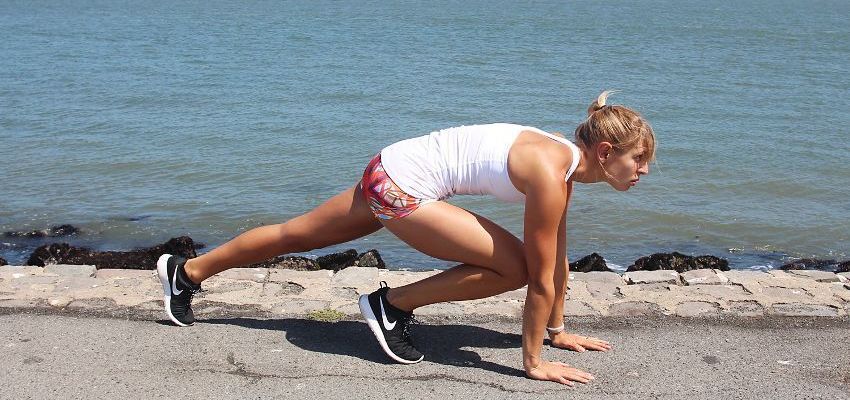
5 Things Naturally Fit People Do Differently

5 Things Naturally fit People Do differently
We all know those people — the ones who never seem to have to even try to stay in shape.
The ones who get up early on a Saturday morning to work out with a smile on their face, then polish off a cookie (or two) later that day — without ever obsessing over calories or seeming to put on a single pound.
And while it may seem like they just have really good genes, whether they know it or not, naturally fit people have built up a set of habits over the years that have allowed them to stay in shape without putting in a lot of effort.
Here are 5 things naturally fit people do differently:
1. They actually enjoy staying active
If you’re one of those people who dreads every minute of your upcoming workout, it’s time to find a different approach to exercise.
Because most of the time, fit people find a way to actually enjoy — and even look forward to — their workouts.
And while that may not always mean they’re excited to do 100 burpees on any given day, it does mean that they like the feeling of being fit and value that more than their desire to sit on the couch.
If you really dread exercise, the problem may be with your workout, not you. Everyone enjoys doing different things — I used to hate working out when I thought running was the only way to stay in shape, but ever since I discovered HIIT training, I can hardly take a day off from my workouts (because I actually enjoy them!).
2. They don’t diet.
Have you ever known someone in really great shape who was constantly trying out every new fad diet?
Yeah, me either.
Because for the most part, fit people don’t diet — they make healthy eating a part of their lifestyle.
Ultimately, the key to staying fit and eating healthy is to learn to listen to your body. What makes you feel good and keeps you feeling full and energized throughout the day?
Learn to answer these questions for yourself, and you’ll soon be on the road to embracing healthy eating as a lifestyle — not following every new diet that comes along.
3. They spend time with other fit people.
You know that saying, “you are what you eat?” Well, you are who you eat with (and socialize with) as well.
Just think about it: if all your friends are constantly eating fast food and choosing sedentary activities instead of active ones, what do you think you’re going to do? Probably eat junk and sit around all day too.
On the other hand, if your friends are into healthy cooking, and enjoy doing active things like going for bike rides or playing tennis for fun, you’re probably going to join in and be more active as a result.
This may be tough at first if you have old friends with unhealthy habits, but you can try and encourage them to be healthy too with small changes to your usual activities — and you can always try and meet some new more active, health-minded friends as well.
4. They prioritize their sleep.
If you still think being fit is only about how often you work out, you need to think again. Because one of the top things fit people do to stay healthy and fit isn’t exercise-based at all — it’s getting enough sleep.
Not only does sleep give you the energy you need to work out consistently, it also helps regulate your metabolism, repair your muscles, boost your athletic performance and more. Try and get at least 7-8 hours a night.
5. They don’t try to be “perfect.”
Sure, there’s that rare person that refuses even a single bite of dessert in order to stay lean and actually seems to be OK with it. But most of us need to reward ourselves with a treat sometimes in order to keep our sanity.
Giving yourself permission to enjoy your favorite treat now and then — whether it's something as simple as a latte or even a chocolate chip cookie — will ensure you don’t feel bitter about your healthy diet (then go crazy and binge on all the things you feel like you're missing out on).
The same is true with your workouts — if you can tell your body is asking for a day off even when you hadn't planned on taking one, give yourself the rest your body needs, and refuse to feel guilty because of it.
Seek balance in both your eating habits and your workouts, and you'll be a healthier, happier and fitter person as a result.
Source: 5 Things Naturally fit People Do differently

Friday, June 20, 2014

10 Tips to Get Extra Cash Instantly

Cash

You have exhausted your emergency fund. And you have almost overdrawn your current account and there are only a few dollars left in your savings account. You need extra cash. First, identify internal sources of fund where you don’t have to incur charges or interest before your get funding from outside sources. Here are the ten sources of fund:


1. Cash your fixed deposits: Sacrifice your interest for a premature withdrawal of your fixed deposit. Take out the amount you need and deposit the rest into your savings account.

2. Your children’s savings accounts: There are substantial savings over the years in your children’s savings accounts. You may withdraw but remember to top up later.

3. Liquidate part of your investment: Look into your stocks, shares, and unit trusts. Sell a small part of it to meet your cash requirements

4. Staff advance from your company: Salary advance is the quickest way to get cash without interest and charges. However, the amount will be deducted at the end of the month when you get your pay.

5. Cash value of your life policies: There is cash value in your life insurance policies. You can get a policy loan against the cash value. In fact, if one of the policies is investment-linked just do a partial redemption and you don’t have to repay. The policy is still in force.

6. Get a loan from your friends or relatives: You have to be thick-skinned. It is embarrassing to let your friends and relatives know your predicament. To maintain goodwill when you repay the loan, add a little extra.

7. Pawn your valuables: Don’t let those you know see you at the pawnshop. You can pawn your jewelry to meet your temporary needs

8. Get a personal loan from a bank: It may not be as fast as you think, but the banks are looking for people with good credit standing to give out personal loans. Be one of them. Interest will be charged to your loan and you have to repay in monthly installments

9. Get an advance from your credit card: You get immediate cash at a higher cost than a loan from a bank. You will be slapped with an advance fee and compounded interest as long as the amount is outstanding.

10. Borrow from a loan shark: This is the last resort. The interest rate is exorbitant. You have to make very sure to pay back fully on time or else this will be the beginning of your nightmare.


The best thing to do, however, is to earn some extra money to meet your cash requirements.

Source: 10 Tips to Get Extra Cash Instantly

Thursday, June 19, 2014

7 Personality Traits of a Great Leader

7 Personality Traits of a Great Leader

If you want to be a leader who attracts quality people, the key is to become a person of quality yourself. Leadership is the ability to attract someone to the gifts, skills and opportunities you offer as an owner, as a manager, as a parent. Jim Rohn calls leadership the great challenge of life. What’s important in leadership is refining your skills. All great leaders keep working on themselves until they become effective. Here’s how: 


1. Learn to be strong but not rude. It is an extra step you must take to become a powerful, capable leader with a wide range of reach. Some people mistake rudeness for strength. It’s not even a good substitute. 

2. Learn to be kind but not weak. We must not mistake kindness for weakness. Kindness isn’t weak. Kindness is a certain type of strength. We must be kind enough to tell somebody the truth. We must be kind enough and considerate enough to lay it on the line. We must be kind enough to tell it like it is and not deal in delusion. 

3. Learn to be bold but not a bully. It takes boldness to win the day. To build your influence, you’ve got to walk in front of your group. You’ve got to be willing to take the first arrow, tackle the first problem, discover the first sign of trouble. 

4. You’ve got to learn to be humble but not timid. You can’t get to the high life by being timid. Some people mistake timidity for humility. Humility is almost a God-like word. A sense of awe. A sense of wonder. An awareness of the human soul and spirit. An understanding that there is something unique about the human drama versus the rest of life. Humility is a grasp of the distance between us and the stars, yet having the feeling that we’re part of the stars. So humility is a virtue, but timidity is a disease. Timidity is an affliction. It can be cured, but it is a problem. 

5. Be proud but not arrogant. It takes pride to win the day. It takes pride to build your ambition. It takes pride in community. It takes pride in a cause, in accomplishment. But the key to becoming a good leader is being proud without being arrogant. In fact, I believe the worst kind of arrogance is arrogance from ignorance. It’s when you don’t know that you don’t know. Now that kind of arrogance is intolerable. If someone is smart and arrogant, we can tolerate that. But if someone is ignorant and arrogant, that's just too much to take. 

6. Develop humor without folly. That’s important for a leader. In leadership, we learn that it’s OK to be witty, but not silly. It’s OK to be fun, but not foolish. 

7. Lastly, deal in realities. Deal in truth. Save yourself the agony. Just accept life like it is. Life is unique. Some people call it tragic, but I’d like to think it’s unique. The whole drama of life is unique. It’s fascinating. And I’ve found that the skills that work well for one leader may not work at all for another. But the fundamental skills of leadership can be adapted to work well for just about everyone: at work, in the community, and at home. 

Source: 7 Personality Traits of a Great Leader

Wednesday, June 18, 2014

7 Ways Doing Nothing Will Make You More Productive


The Benefits of doing Nothing

We take classes, read self-help articles and drink energy drinks just to push ourselves to the next level of performance. Time is money, and we only have to much of it in a day, so we take calls on the bus and bring our laptops on vacation. We assume not working is the opposite ofproductivity, but that's not always true. Sometimes, doing absolutely nothing is the best way to achieve your goals. Here are a few reasons why.

1. It Gives You a Choice

The executive gets up and goes to work because he has to. The freelancer sits down at her laptop because she has to. The stay-at-home parent does the dishes and laundry because they have to. We rarely think about work as a choice, but that's exactly what it is. When we entertain the option of doing nothing instead, it has a positive effect. A recent study showed that "simply having the choice to sit back and do nothing during your day-to-day grind actually increases your commitment to a certain goal, and may even boost your likeliness to achieve that goal."

2. It Allows You to Rest

So what about going beyond just the option? What happens when we actually step away from the grindstone and do nothing? We may become quiet. We may daydream or (gasp!) take an actual nap. We might pick up a book or play with the cat or Netflix that sit-com everyone's talking about. All of these things reduce stress and allow the mind and body to relax — something that's becoming increasingly difficult in our always-on world. (See also:How to Do Less — And Why You Should)

3. It Gets You Outside

If you're feeling really adventurous, you just might choose to do nothing outside. You might even take a walk. Taking 10,000 steps a day (preferably outside) unleashes an abundance of health benefits, from weight loss and a better sex life to decreased risk of dementia and cancer. Spending just 30 minutes in nature also delivers brain-enhancing benefits like positive mood and better memory — all things that boost productivity.

4. It Opens the Door for Creativity

Feeling stuck in a rut? Having trouble coming up with new ideas? "[B]eyond a certain point, doing more or working harder is actually counter-productive. Your energy and concentration levels dip, your frustration increases, and if you're not careful you could be on the slippery slope to creative burnout." Giving yourself permission to walk away is an opportunity for the mind to get its mojo back.

5. It Reveals Priorities

When you have the option of doing nothing, it allows you to zero in on what really matters. When you're resting, what do you find yourself thinking about? What ideas surface? What issues tug at your heart? Those are probably the things that should be at the top of your to-do list when the break is over. (See also: Simple Living: Determining Your Priorities)

6. It Reinforces Your Goals

Researchers say that "by selecting to choose a goal or task over doing nothing, you're giving it value and you reinforce that it must be a good goal or task for you to take on — so you put in more work." Then, when you see progress, it's motivating and your productivity goes up.

7. It Diffuses Fear

One of the reasons we procrastinate is because we're afraid. Really important tasks or big projects are fraught with uncertainty. We hate failure: Even the prospect of it can paralyze us. So instead of backing yourself against a mental wall, acknowledge that you always have the option to do nothing. While doing nothing, take the time to examine your fear (and the task that caused it) from all angles. Look at the pros and cons. It's likely you have very little to lose from trying.
Source: 7 Ways Doing Nothing Will Make You More Productive
Related Posts Plugin for WordPress, Blogger...